Few workplace traditions have lasted as long as giving turkeys for employees at the holidays. For generations, companies have handed out a Thanksgiving or Christmas turkey as a simple, practical way to say thanks for a year of hard work.
The tradition is still going strong, but how companies deliver it has changed. Fewer businesses want to manage a refrigerated truck in the parking lot, and more teams are spread across shifts, sites, and home offices. This guide covers why turkeys still make a great employee gift, your delivery options, the tax rules HR should know, and how to plan so everything goes out on time.

Why turkeys make a great employee gift
A turkey is one of the few gifts that nearly everyone can use, and it lands right when household budgets are stretched. Here’s why it keeps winning out over mugs, gift baskets, and branded swag.
- It feeds the whole family. A turkey becomes a shared holiday meal, so the thank-you reaches the people at home who support your employees all year.
- It’s practical. Groceries are a real expense in November and December. A turkey takes something off the shopping list instead of adding clutter to a shelf.
- It’s fair and easy to explain. Everyone gets the same gift, from the front office to the plant floor, which keeps things simple and avoids comparisons.
- It carries tradition. Many long-tenured employees remember the company turkey from years past. Keeping the tradition sends a message that the culture hasn’t changed.
- It’s budget-friendly. A turkey feels generous without the cost of a bonus or a high-end gift, which makes it easy to include every employee.
Whole turkeys vs. turkey gift certificates
There are two main ways to give turkeys for employees: hand out actual birds, or give a certificate employees redeem at the grocery store. Here’s how they compare.
| Whole turkeys | Turkey gift certificates | |
|---|---|---|
| Logistics | Order, store, and refrigerate hundreds of pounds of frozen poultry | Certificates ship to you; hand them out or mail them |
| Distribution | Usually one pickup day at one location | Hand out anytime, at any site, or mail to remote staff |
| Employee choice | Same bird for everyone | Employees pick the brand, size, and timing |
| Dietary needs | Hard to accommodate | Flexible options can cover ham or other groceries |
| Food safety | Risk if birds sit out or can’t be kept cold | No perishables to manage |
| Getting it home | Employees haul a 15-pound bird on their commute | Fits in a wallet |
Whole turkeys still work well for a single-site team that can handle cold storage. For most companies, especially those with multiple locations, shift workers, or remote employees, certificates deliver the same tradition with far less hassle.
How turkey gift certificates work
A turkey gift certificate works like a manufacturer coupon that covers the cost of a turkey, up to the value printed on it. Employees take it to the grocery store, pick out a turkey, and hand the certificate to the cashier at checkout.
With gThankYou certificates, the process looks like this:
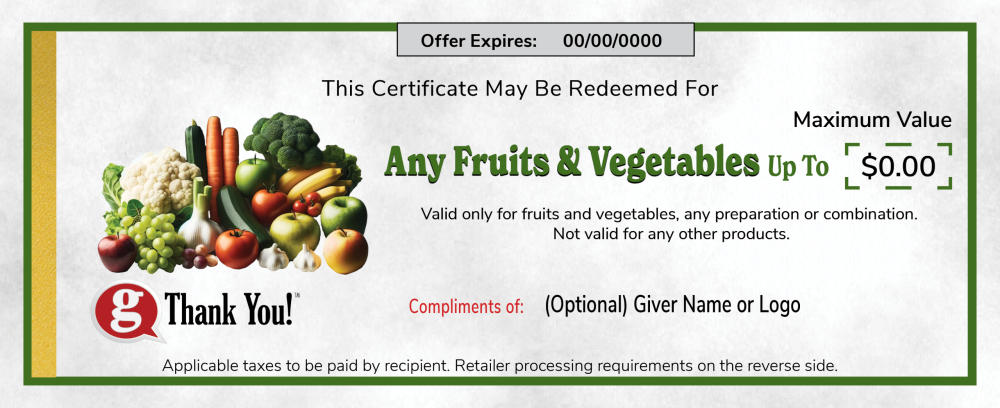
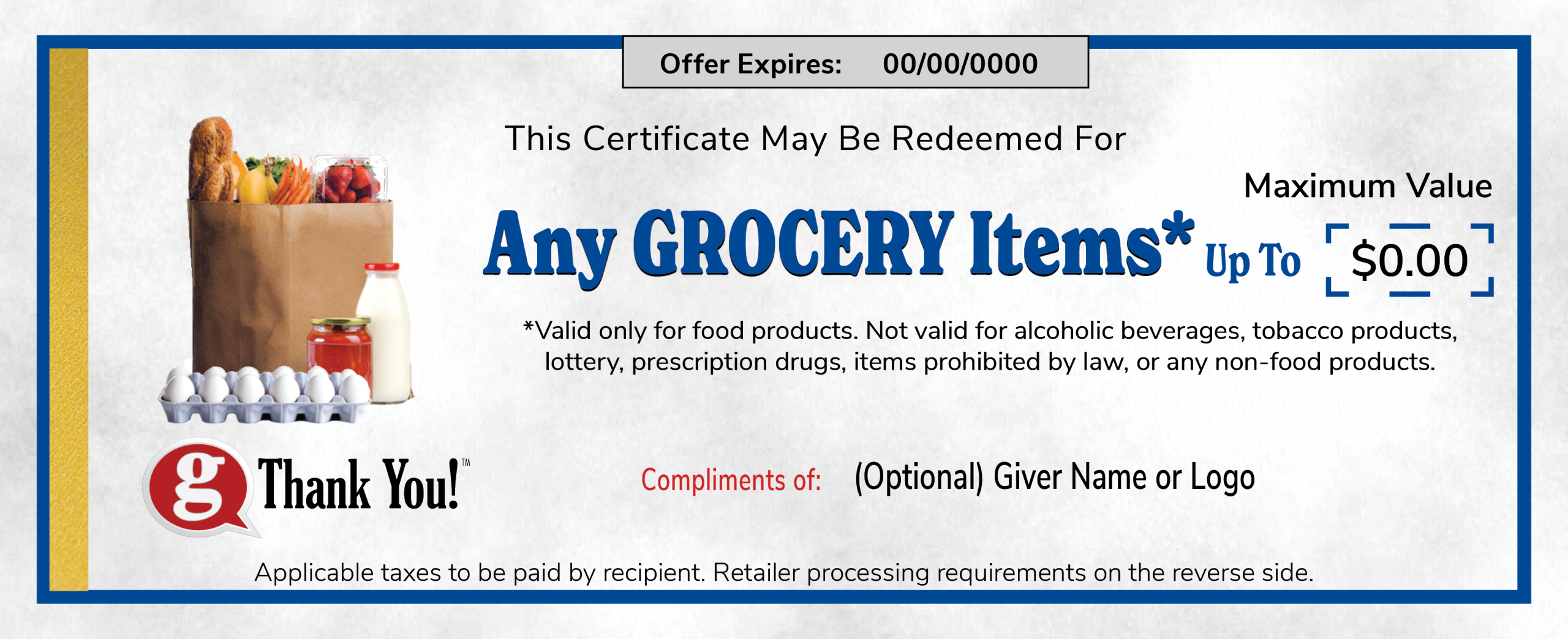
- Choose your certificate. Pick a turkey certificate, a turkey-or-ham certificate, or a flexible dollar-amount grocery certificate.
- Pick a value and quantity. Set the amount that fits your budget and order one for each employee.
- Personalize it. Add your company name and a message so the gift feels like it came from you.
- Hand them out. Give them out at a team meeting, tuck them into holiday cards, or mail them to remote staff. Every order includes free gratitude cards to make the handoff feel personal.
- Employees redeem. They use the certificate for any brand or size of turkey at major U.S. grocery stores, whenever it works for their holiday plans.
Because employees shop on their own schedule, nobody has to take a frozen bird home in the middle of a workday, and families who prefer a fresh turkey, a turkey breast, or a ham can get what they’ll actually cook.
Are turkeys for employees taxable? The de minimis rule
A holiday turkey can usually be given tax-free as a de minimis fringe benefit, but a cash-like gift card generally can’t. Here’s what HR should know.
The IRS defines a de minimis fringe benefit as something so small in value, and given so rarely, that accounting for it would be unreasonable. Treasury regulations list traditional holiday gifts of property (not cash) with a low fair market value as an example, and a holiday turkey or ham is the classic case.
Cash and cash equivalents are different. The IRS says cash can never be de minimis, and a gift card redeemable for general merchandise is treated like cash, no matter how small the amount. In a 2004 ruling, the IRS found that $35 grocery coupons an employer gave in place of its traditional turkey or ham were taxable.
Certificates tied to a specific item fall in between. IRS guidance says a certificate that lets an employee receive a specific item of low value, given infrequently, may be excludable as de minimis depending on the facts and circumstances.
What this means in practice:
- Turkey or turkey-or-ham certificates are redeemable only for a specific item, which supports de minimis treatment.
- Flexible dollar-amount grocery certificates work more like a general gift card, so plan to treat them as taxable wages.
- There’s no official dollar limit. Keep the value modest and give it once a year.
This is general information, not tax advice. Check with your tax advisor or payroll provider before deciding how to report your holiday gifts.
Sources: IRS: De minimis fringe benefits · Ogletree Deakins: Are holiday gifts taxable wages? · IRS TAM 200437030
How to plan your employee turkey gift
A little planning keeps the holiday turkey from becoming a last-minute scramble. Work through these steps a few weeks before you want gifts in hand.
- Set your budget. Decide on a per-person value. Many employers choose an amount that covers a typical family-size turkey at local grocery prices.
- Confirm your headcount. Include part-time staff, seasonal workers, and anyone who might be left off a standard payroll list.
- Plan for every location. List each site, shift, and remote employee so no one misses out. Mailed certificates make it easy to reach people who aren’t on site.
- Choose your timing. For Thanksgiving, aim to have gifts in employees’ hands by mid-November so they can shop before the holiday rush. For Christmas, early December works well.
- Make the handoff personal. A short note from a manager or the CEO turns a practical gift into real recognition. Say what the team accomplished this year and why it mattered.
- Loop in payroll. Share which certificate type you chose so payroll can handle reporting correctly.
Tip: If your workforce is diverse in diet or tradition, consider a turkey-or-ham certificate or a flexible grocery certificate so everyone gets something they’ll use.
FAQ: Turkeys for employees
How much should I spend on a turkey for each employee?
There’s no set amount. Most employers choose a value that covers a standard family-size turkey at local grocery prices. Keeping the value modest also supports de minimis treatment.
Can employees choose a different brand or size of turkey?
Yes. gThankYou certificates are redeemable for any brand or size at major U.S. grocery stores, so employees can pick fresh, frozen, organic, or a turkey breast.
What about employees who don’t eat turkey?
A turkey-or-ham certificate or a flexible grocery certificate lets everyone choose something that fits their holiday table.
How do I give turkeys to remote employees?
Mail them a certificate. It fits in a standard envelope and can be redeemed at a grocery store near their home.
Are turkeys for employees tax-free?
A traditional holiday turkey is a common example of a de minimis fringe benefit. Certificates tied to a specific item like a turkey may also qualify, while flexible dollar-amount certificates are generally taxable. Confirm with your tax advisor.
When should I order?
Order a few weeks before you plan to hand gifts out. For Thanksgiving, that usually means late October or early November.
Keep the tradition, skip the hassle
Giving turkeys for employees is a simple way to thank your whole team and the families behind them. With turkey gift certificates, you keep everything people love about the tradition and drop the cold storage, pickup lines, and frozen-bird commutes.
Since 2007, gThankYou has helped companies, nonprofits, and government agencies share holiday turkeys, hams, and groceries with their teams. Every order comes with free gratitude cards, so your thank-you arrives with a personal touch.
Ready to plan this year’s employee turkeys? Order turkey gift certificates or call 888-484-1658 to talk with our team.